











© Garden-shower.eu 2026
All Rights Reserved.
All Rights Reserved.


Imagine enjoying a pleasant shower in the garden after a day in the sun, rinsing off chlorine after swimming in the pool or taking a warm shower on the terrace – without having to install a conventional hot water system.
A solar shower uses energy from the sun to heat water in an integrated tank. This provides a practical, energy-saving solution for your garden, terrace, holiday home or pool area.
Solar showers come in many sizes, materials and designs. This guide explains the key differences so you can find the solution that best suits your needs and outdoor space.
A solar shower, also known as a solar-heated outdoor shower, works by using the sun's rays to warm the water stored in an integrated tank.
The shower is normally connected to an ordinary garden hose that supplies cold water. The water inside the tank gradually heats up as sunlight reaches the surface of the shower.
Most models have a mixer tap that combines the heated water with cold water from the supply. This allows you to adjust the water temperature while showering.
The main advantage is that heating requires neither electricity nor a connection to the home's hot water system. The water is heated naturally by the sun, and normally all you need is access to cold water.
Positioning plays an important role in how warm the water becomes. A solar shower works best when it receives several hours of direct sunlight each day.
As a general guide, around 3–4 hours of direct sunlight or more provides good conditions for heating the water on sunny summer days. However, the result also depends on the outdoor temperature, tank size, shower construction and intensity of the sunlight.
Where possible, avoid places where trees, buildings or roof coverings shade the shower for much of the day.
On warm, sunny days, the water inside the tank can become very hot. Always start with a low temperature and check the water before stepping under the shower.
On cloudy or cooler days, the water will generally heat more slowly and reach a lower temperature. A solar shower is therefore mainly intended for the frost-free part of the year.
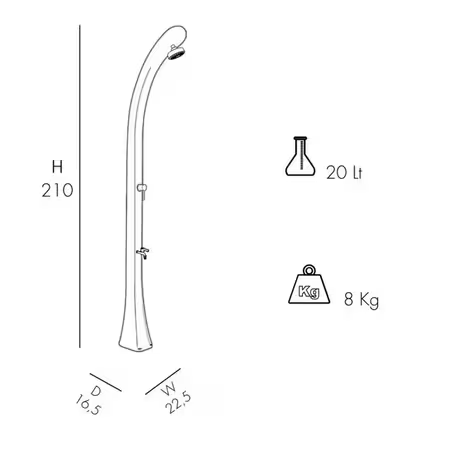
One of the main differences between solar showers is the size of the integrated water tank. Its capacity affects how much solar-heated water is available before the tank needs time to warm up again.
Suitable for smaller terraces, holiday homes and households where the shower is mainly used for short showers and quick rinses.
A smaller tank contains less water that needs heating, but it also provides a more limited amount of warm water.
A popular mid-sized option for everyday family use, terraces and swimming pool areas.
The larger tank provides more heated water, for example when several people want to rinse off after swimming in the pool.
Suitable for families, pool areas and locations where several people use the shower one after another.
A larger tank provides a greater reserve of solar-heated water, but it may also require a longer heating time.
The number of showers a tank can provide depends on the water temperature, how much cold water is mixed in, the water flow rate and the length of each shower. Tank capacity in litres therefore cannot be converted directly into a fixed number of showers.
One advantage of a solar shower is that installation is normally much simpler than with traditional outdoor showers that require both hot and cold water connections.
Most solar showers connect to an ordinary garden hose supplying cold water.
When the water supply is turned on, the shower's tank fills up. The sun then warms the water, which can be mixed with cold water during use.
Always check the shower connection, water pressure requirements and the manufacturer's installation instructions.
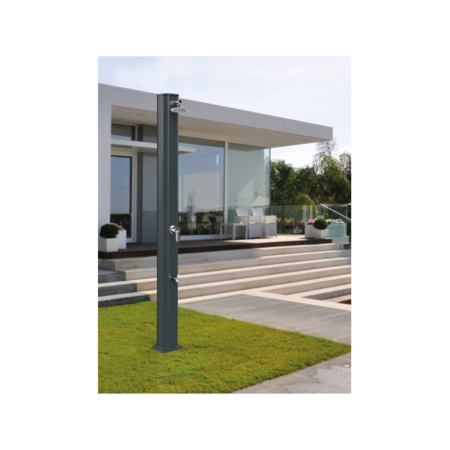
Most solar showers are freestanding models that must be securely fixed to a stable surface.
This could be a suitable concrete surface or a solid foundation beside the terrace or pool.
The shower must withstand both the weight of the filled water tank and the forces of normal use. Always follow the manufacturer's requirements for the foundation and fixings.
When installing a shower on a wooden deck, pay particular attention to the structure's load-bearing capacity and the possibility of securing the shower safely. It is not enough for the shower to appear stable when the tank is empty.
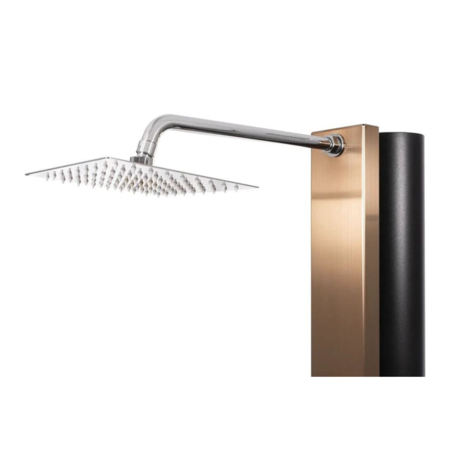
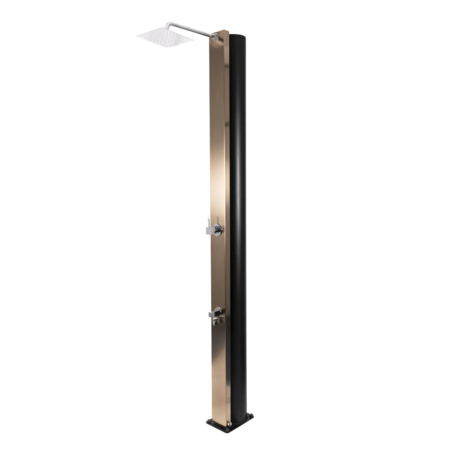
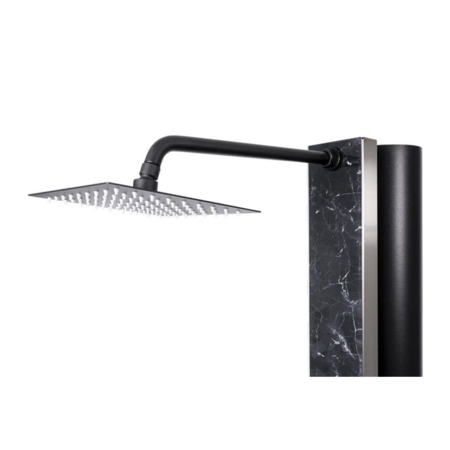
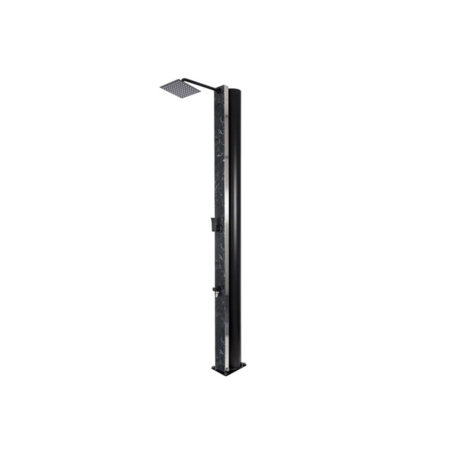
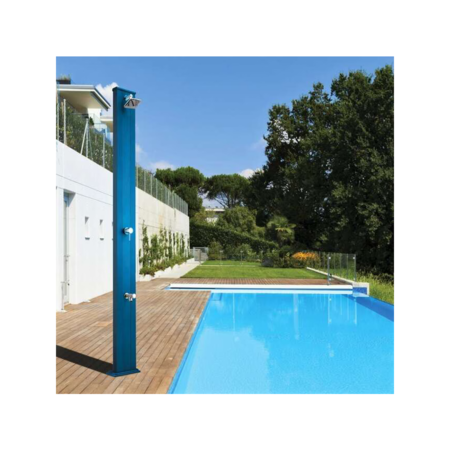
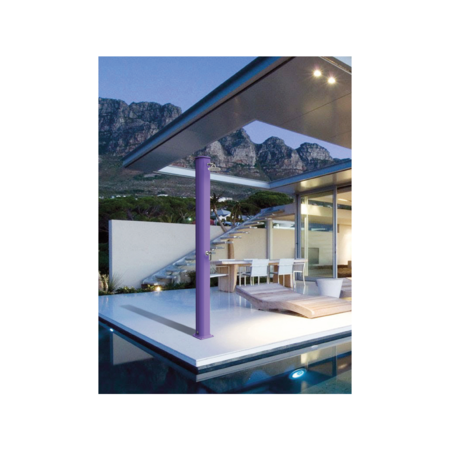
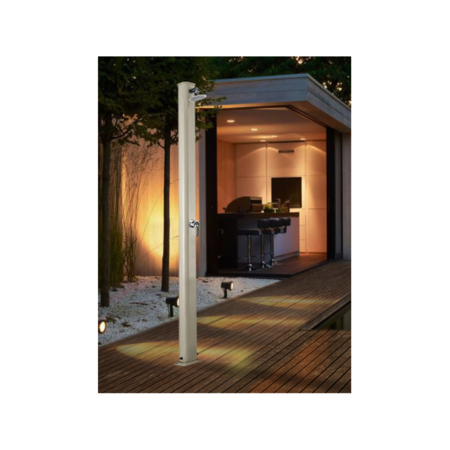
The choice of material affects the shower's appearance, weight, finish and maintenance requirements. Our range includes solar showers made from aluminium and polyethylene.
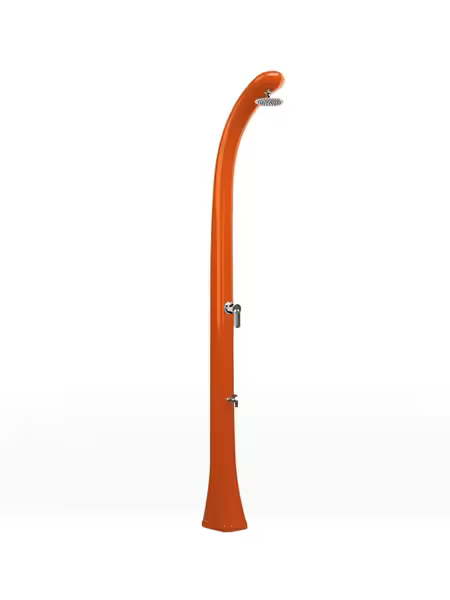
Polyethylene is a plastic material well suited to outdoor use. It can be shaped into many different designs and is available in a wide variety of colours. The material is normally relatively easy to clean.
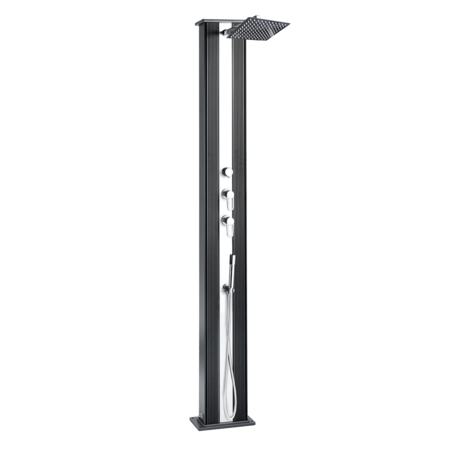
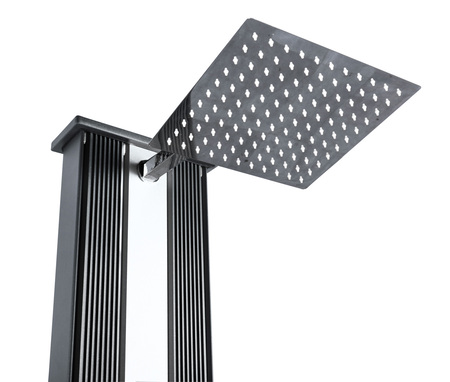
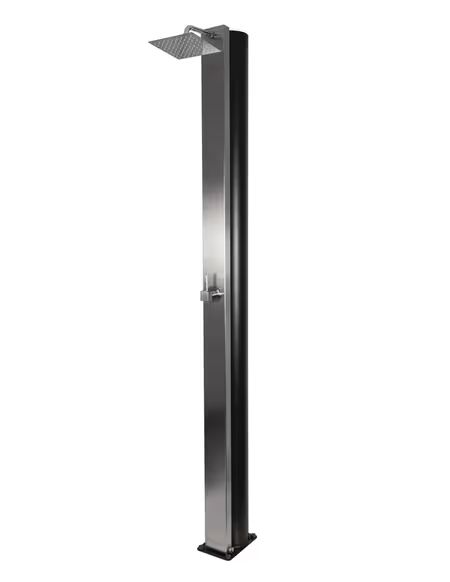
Aluminium is often used in design-focused solar showers with slim profiles and modern finishes. Aluminium is relatively lightweight and can give the shower a premium, minimalist appearance.
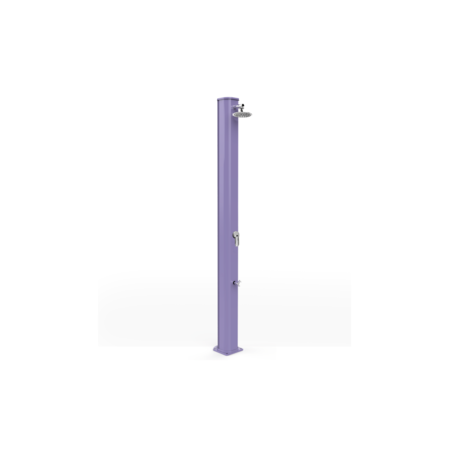
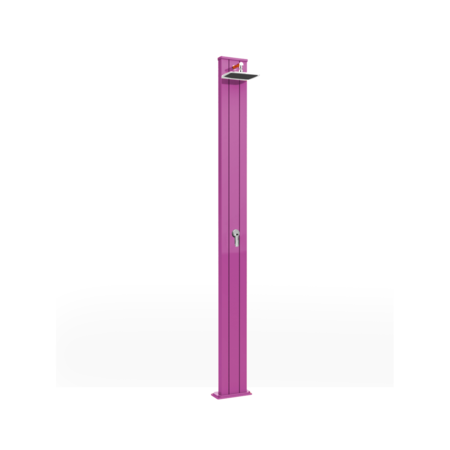
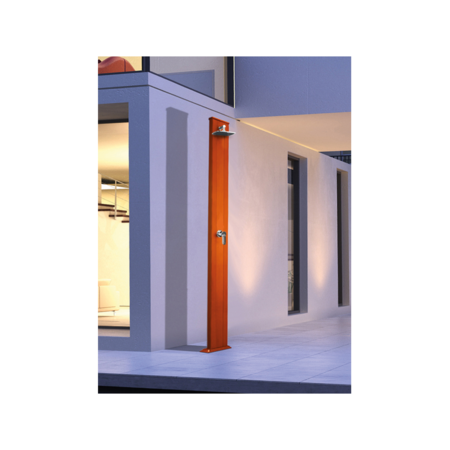
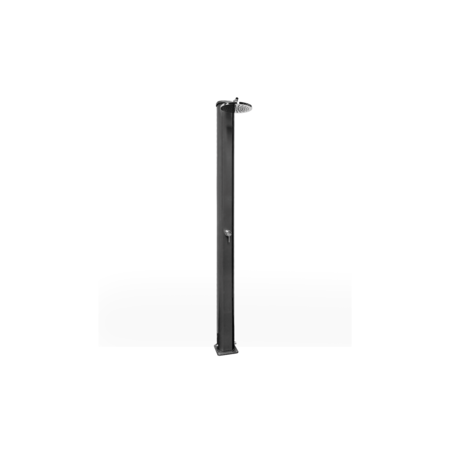
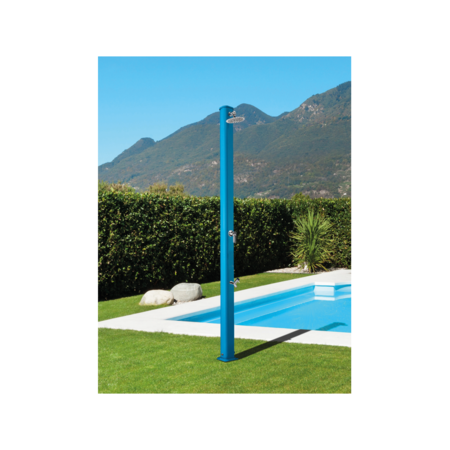
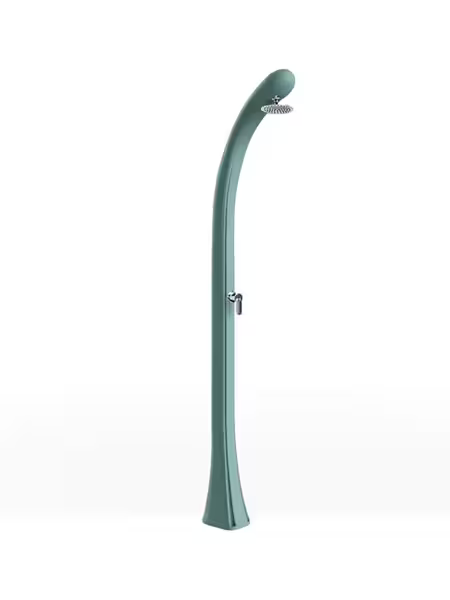
You can choose between classic black and grey models or more colourful solar showers, including white, blue, green and other shades.
A dark shower can often absorb solar radiation efficiently, but colour alone does not determine how quickly the water heats up. The tank's design, material and positioning also play important roles.
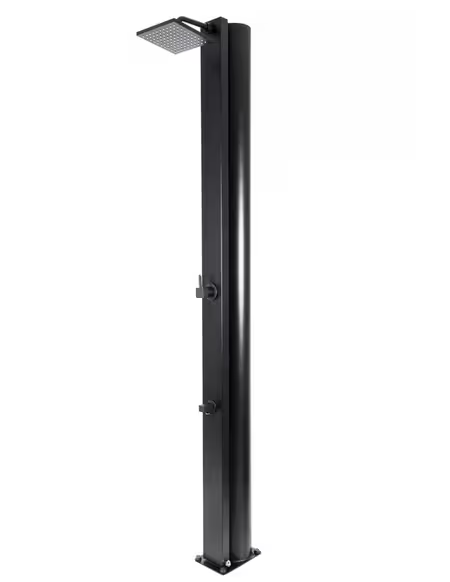
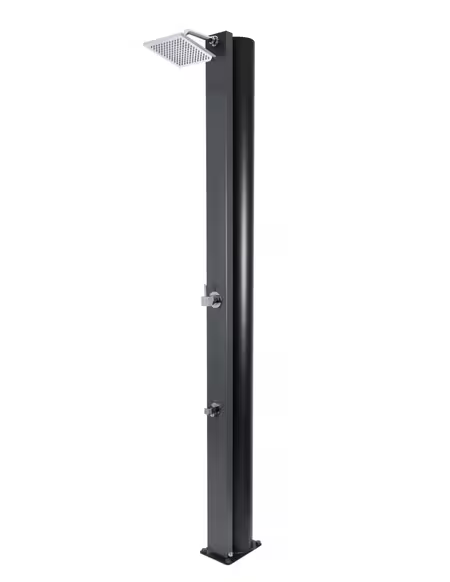
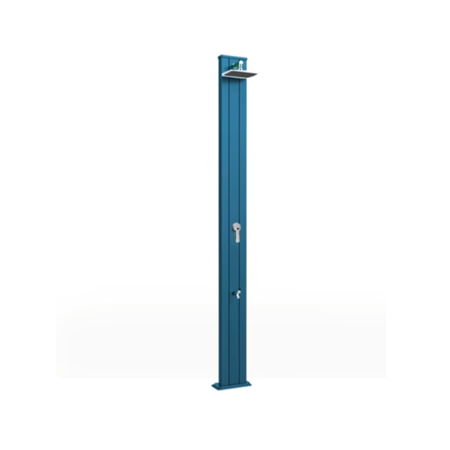
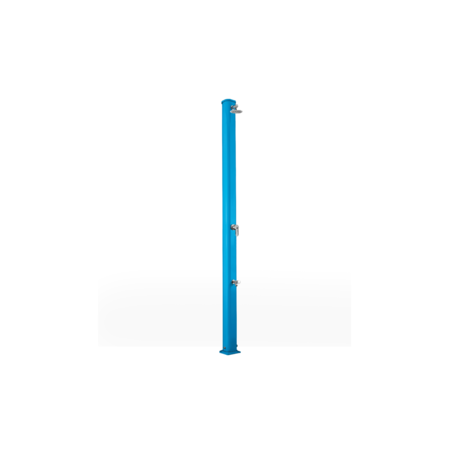
Some solar showers have a separate foot shower at the bottom of the shower column. This is a practical feature, particularly when the shower is positioned beside a swimming pool, at the beach or on a terrace.
A solar shower with a foot shower can be particularly useful for families with children when several people need to rinse their feet before jumping into the pool.
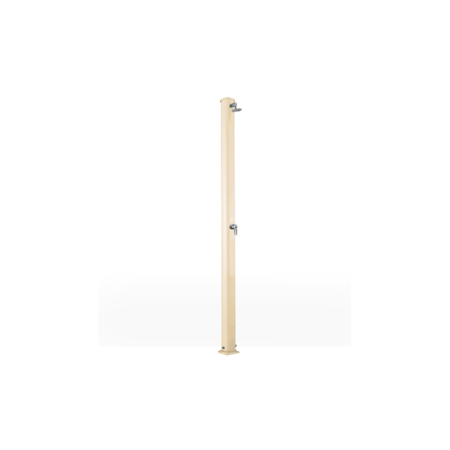
If you mainly want an elegant shower for regular showering, a model without a foot shower may be a simpler choice.
A solar shower relies on the sun's energy, so the water temperature can vary from day to day.
On warm summer days with many hours of direct sunlight, the water inside the tank can become very hot. It may therefore be necessary to mix in a considerable amount of cold water to achieve a comfortable temperature.
As you use the shower, the consumed water is gradually replaced by fresh cold water from the supply. After substantial water use, the tank needs time to heat up again.
A large water tank provides more heated water, but that does not necessarily mean the water heats up faster.
Important: In strong sunlight, the water can become hot enough to cause scalding. Always check the temperature before use, especially when children are using the shower.
Most solar showers are not frost-proof and must not be left with water in the tank when temperatures fall below freezing.
Water expands when it freezes and can damage the tank, mixer tap, pipes and other internal components.
Before frost arrives, the water supply must be disconnected, and the tank and all other water-carrying parts must be completely drained.
As a general rule, the solar shower should be dismantled and stored in a frost-free location. Always follow the manufacturer's specific winter preparation instructions.
Frost damage resulting from incorrect winter preparation is not covered by the manufacturer's warranty or applicable statutory consumer rights.
A solar shower normally requires little maintenance, but regular cleaning is important for both its appearance and functionality.
Clean the outside with a soft cloth and a mild cleaning product suitable for the material. Avoid abrasive sponges and harsh chemicals that could damage the surface.
If the shower is not used for an extended period, the tank should be emptied or flushed according to the manufacturer's instructions. Water left standing in warm conditions can encourage bacterial growth.
Also check the shower head for limescale deposits and regularly inspect the water connection for leaks.
Proper maintenance, fresh water and suitable winter preparation provide the best conditions for a long service life.
A solar shower has an integrated tank in which the water is naturally heated by the sun's rays. Heating normally requires neither electricity nor a hot water connection. The shower receives cold water, for example through a garden hose.
Yes, the shower can still be used, but the water will normally not get as warm as it would on a sunny day. Heating depends on sunlight, outdoor temperature and tank construction.
It depends on the intensity of the sun, outdoor temperature, tank size and starting water temperature. On a sunny summer day, the water may become comfortably warm after a few hours of direct sunlight. There is no single heating time that applies to every model.
It depends on shower length, water flow rate and how much cold water is mixed in. A 30-litre tank may provide enough water for several short rinses, but not necessarily for several long showers.
Yes, most solar showers are designed for connection to a standard garden hose. Always check the connection and water pressure requirements of the specific model.
Yes. In strong sunlight, water inside the tank can reach a very high temperature. Use the mixer tap to adjust the temperature and always check the water before showering.
Most models must be completely drained and, as a general rule, dismantled and stored in a frost-free place. Follow the manufacturer's winter preparation instructions. Frost damage caused by inadequate protection is not covered.
A solar shower has an integrated tank in which the sun heats the water. An ordinary outdoor shower with hot water normally receives hot water from the home's hot water installation. A solar shower therefore generally requires only a cold water supply, but relies on solar energy for heating.
The right solar shower depends on how many people will use it, where it will be installed and which features you want.
Our range includes compact solar showers for smaller terraces as well as larger models with spacious water tanks, mixer taps and foot showers.
Choose from different materials, colours and designs to find a shower that fits naturally into your outdoor space.
Use the filters in the product listing to find the solar shower that best suits your needs.


