© Garden-shower.eu 2026
All Rights Reserved.
All Rights Reserved.


Dreaming of a warm shower outdoors without running hot water to your garden? This guide explains how a solar shower works, which tank size to choose, where to position it and how to install it.
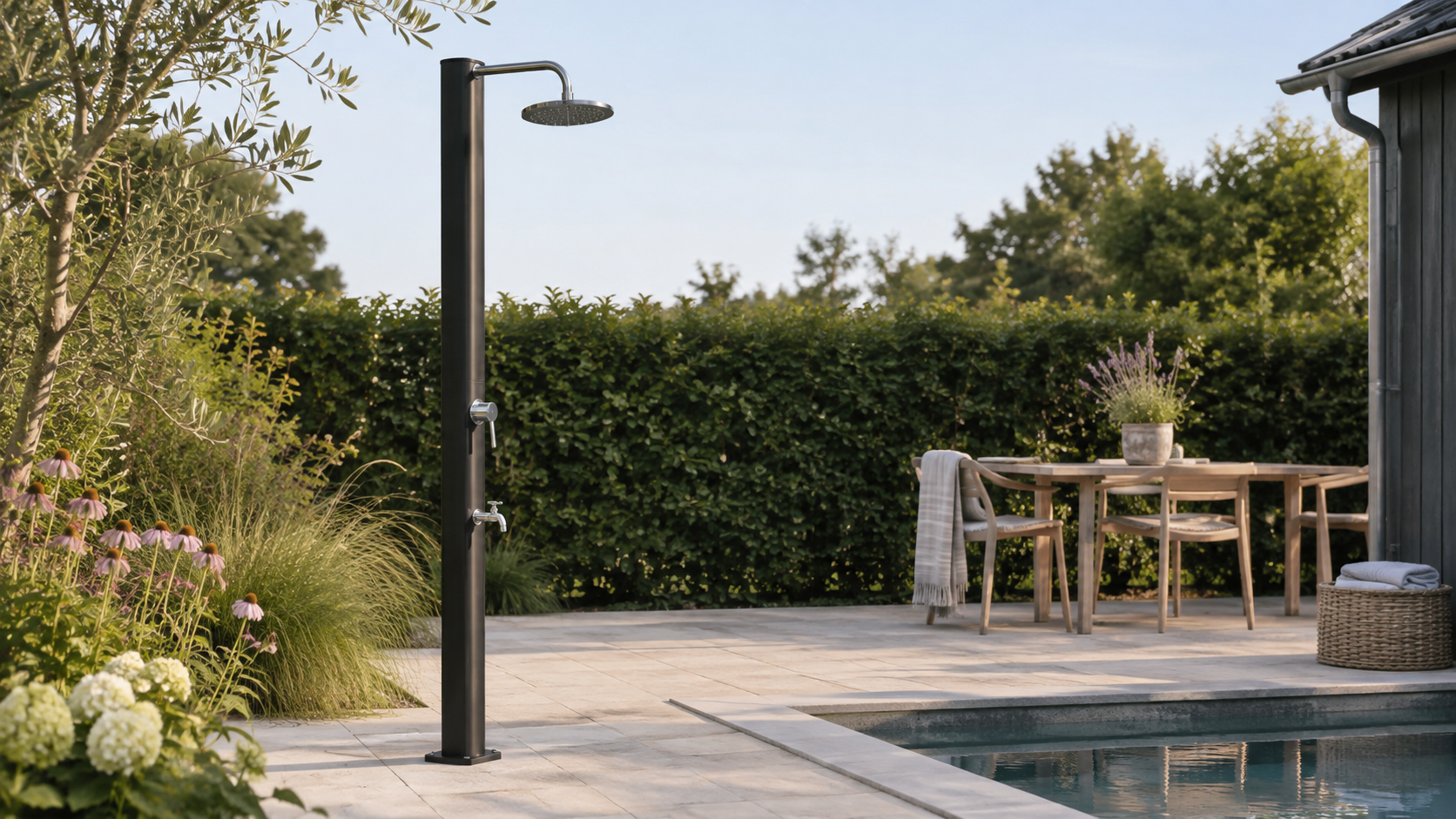
A solar shower is an outdoor shower in which the sun heats water stored in an integrated tank. You typically connect a standard garden hose supplying cold water. Once the tank is full, it absorbs heat from sunlight and the water gradually warms up.
On many models, you can adjust the temperature using a control lever that mixes solar-heated water from the tank with cold water from the supply. This lets you adjust the temperature while the tank contains enough hot water. Design and temperature control vary by model.
A garden hose or another approved cold-water connection supplies the shower.
The tank's surface absorbs solar energy and transfers the heat to the water.
Hot water from the tank is mixed with cold water from the garden hose using the control lever.
Would you like to see the different models? Explore our range of solar showers.
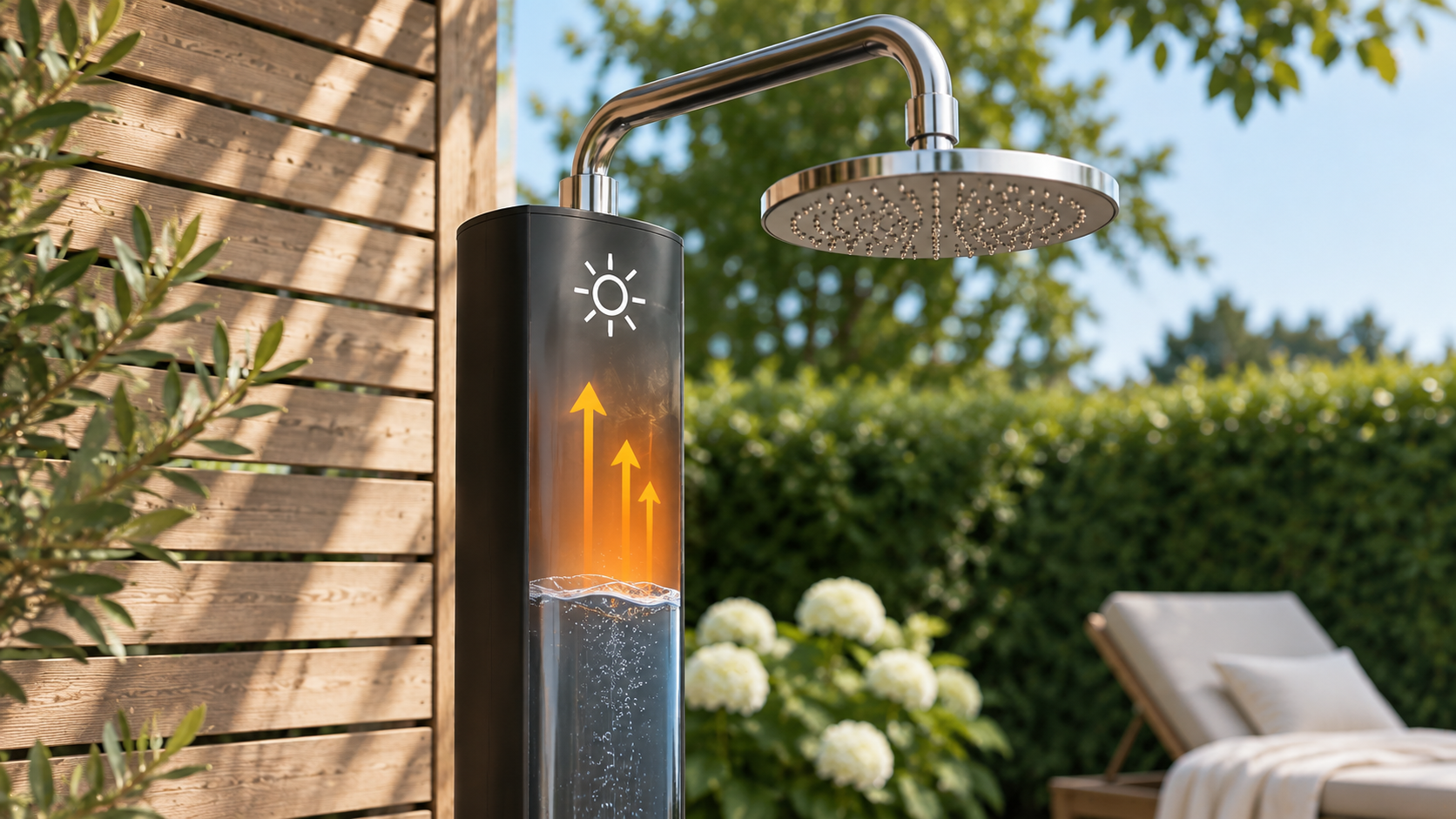
A solar shower uses the sun's heat to provide pleasantly warm water in your garden. On sunny summer days, the water in the tank can reach temperatures above 60 °C, particularly with many hours of sunshine and high outdoor temperatures.
How quickly the water heats up depends on factors including hours of sunshine, air temperature, tank size and water volume. A position in direct sunlight helps the tank make the most of the day's sunshine. On many models, the control lever lets you mix heated water with cold water from the garden hose to achieve a comfortable shower temperature.
Tank capacity is stated in litres and indicates how much water the solar shower can store for heating. A larger tank provides more hot water once heated. To achieve the same temperature rise as a smaller tank, however, it needs more solar energy and time.
The right choice depends on how many people will shower one after another, how long you shower, the showerhead's flow rate and how much cold water is mixed in.
An ideal starting point for a quick rinse after gardening, playtime or a swim. Less water needs heating, which means the tank takes less time to heat the water.
Suitable when several people use the shower one after another or when showers are longer. Heating the tank takes more solar energy and time, but you can enjoy warm showers for longer.
A 35-litre solar shower does not necessarily mean you can use only 35 litres of shower water. On a model with a control lever, hot tank water can be mixed with cold water, increasing the total amount of comfortably warm water. Conversely, the temperature falls as the heated reserve is used up.
Example: If a shower uses 6 litres of water per minute, 35 litres corresponds to about 6 minutes of water use without adding extra cold water. When the temperature is adjusted by mixing in cold water, the amount of comfortably warm water available will actually exceed the tank capacity. Shower duration therefore depends on how much cold water is added and the showerhead's flow rate.
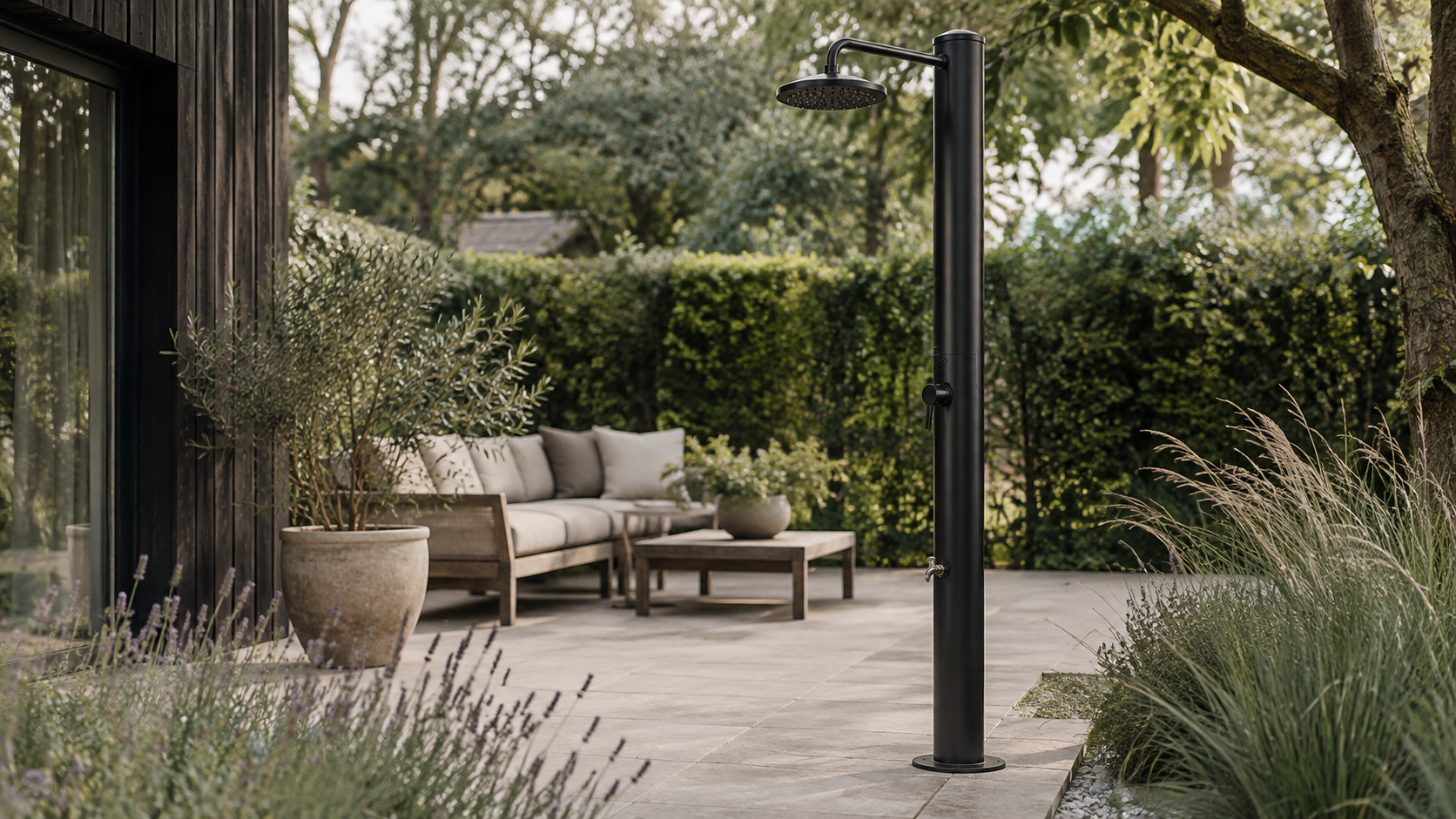
The location has a major effect on how quickly the water heats up and how convenient the shower is to use. Above all, choose a spot that receives many hours of direct sunlight throughout most of the day.
Avoid shade from trees, walls and buildings. A sunny spot sheltered from the wind also makes showering more comfortable.
The shower must stand securely on a surface suitable for the model. Some models can be bolted to paving or concrete. Make sure used water can drain away without causing damp problems or slippery surfaces.
Position the shower so the garden hose can reach it without lying awkwardly in the way.
A location near the pool or patio can be convenient. Allow space for screening if needed.
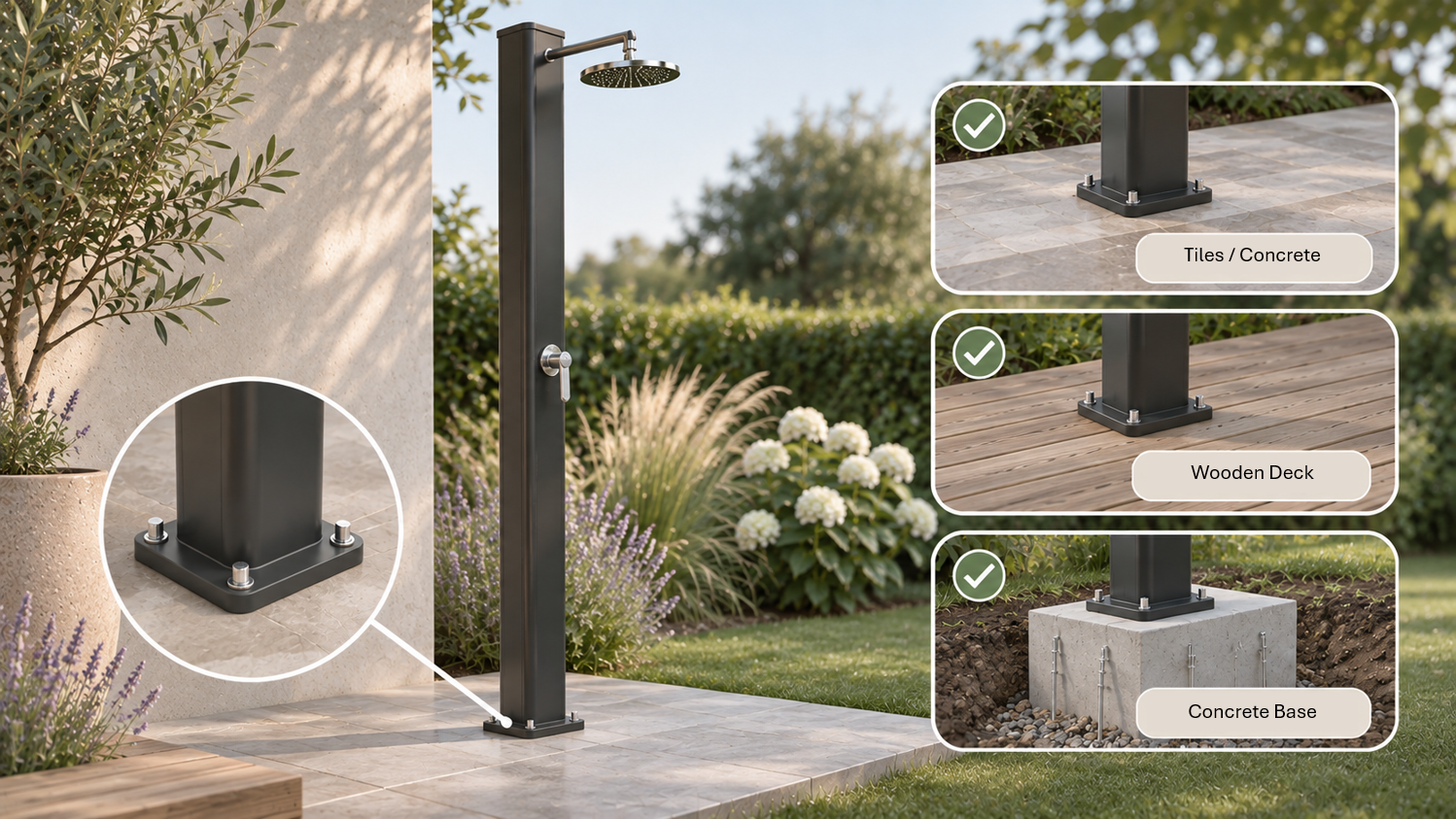
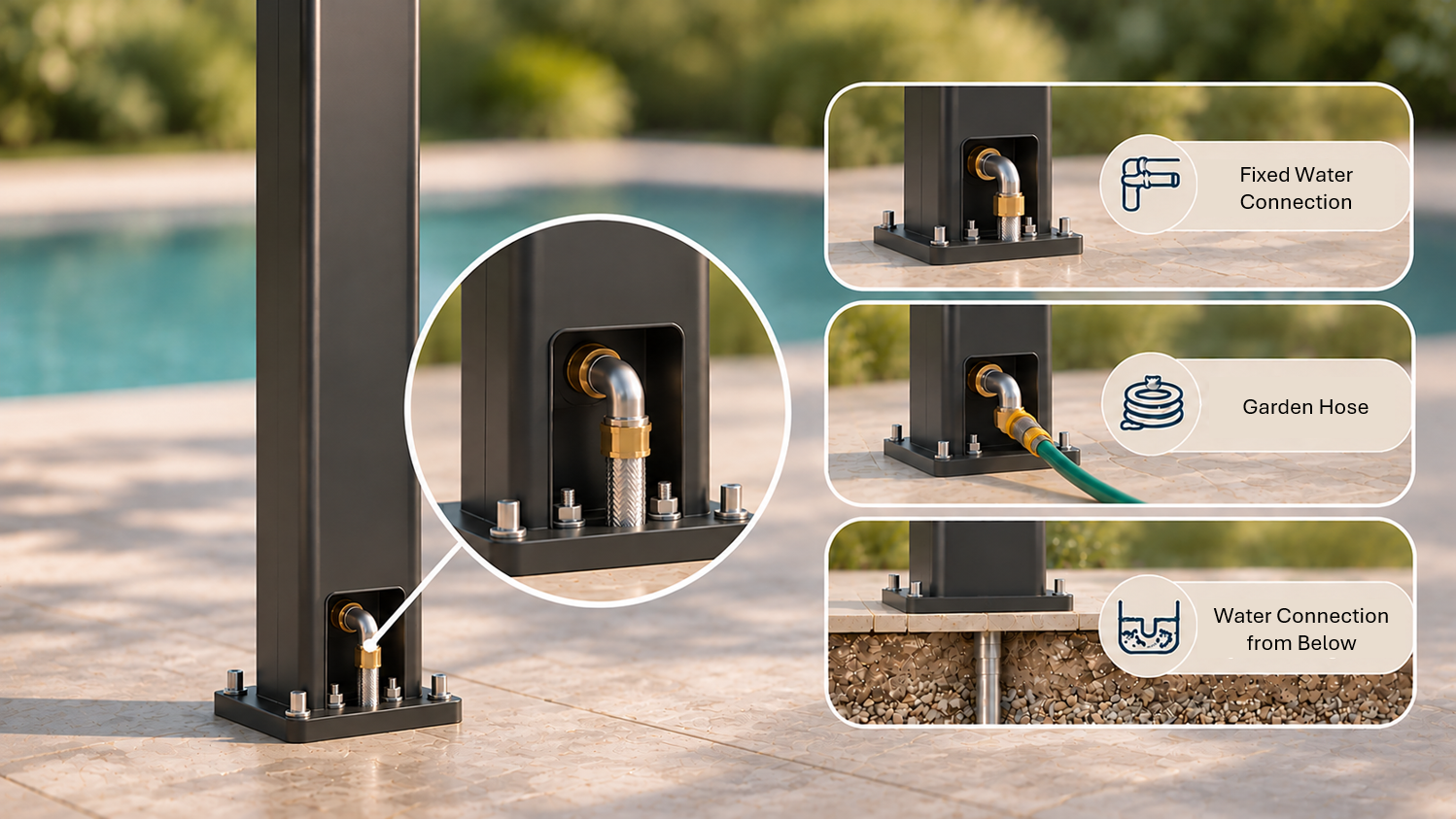
Many solar showers are fairly easy to connect because they require only cold water. Securing the shower is important, however: a full tank is heavy, and the shower must withstand normal use without tipping or coming loose. Always follow the manufacturer's installation instructions.
Check the manufacturer's requirements for the surface, fixings and any concrete base. Paving slabs alone may not provide a sufficient foundation.
Use the brackets, bolts and installation methods specified for the model and surface. Make sure the shower is stable and upright.
Connect the specified cold-water supply, often a garden hose. Check seals, connectors and the manufacturer's water-pressure requirements.
Follow the instructions for initial filling and venting. Check all joints before using the shower.
Give the tank time in direct sunshine and carefully test the water temperature before your first shower.
A permanent connection to your home's water system may require work by an authorised professional and backflow prevention. If in doubt, ask a qualified professional to assess the installation. Also follow local regulations on disposing of shower water, especially if soap or shampoo is used.
A solar shower needs little day-to-day care, but the tank and water-carrying components must be handled correctly. Follow the manufacturer's instructions for flushing, cleaning and managing water that has been standing. Flush the shower after a long period of non-use.
A standard solar shower is not frost-proof. Before freezing conditions, drain all the water and remove the shower for frost-free storage, unless the manufacturer explicitly specifies another approved winter procedure. Frost damage is normally not covered by the warranty.
Yes, water can still flow when the shower is correctly connected, but without enough sunshine it may not become warm. Water that has already been heated can retain some warmth for a while.
A standard solar shower with a sun-heated tank does not use electricity for heating. Some specialist models may have additional features, so check the product specifications.
Yes, many models are designed for exactly that. Always check the connector type and water-pressure requirements for your chosen shower.
It can be more than enough for short rinses, particularly when one person uses the shower at a time. For longer showers or several people in succession, a larger tank may be more suitable.
There is no universal heating time. Sunlight intensity, starting water temperature, tank size and design determine how quickly the water warms up.
Do not assume so. Most standard solar showers must be drained and stored somewhere frost-free. Always follow the manufacturer's winter instructions.
For quick rinses, a smaller tank may be sufficient. For several users and longer showers, a larger tank is worth considering. Whatever the size, you will get the most from your solar shower when it stands in direct sunlight and is installed correctly.
Use this guide as your starting point, then compare each model's capacity, connections and installation requirements in the product specifications.
Find your solar shower here


