© Garden-shower.eu 2026
All Rights Reserved.
All Rights Reserved.








A freestanding outdoor shower lets you create a personalised shower area in the open air. Beside the pool, on the terrace, in the garden or at your holiday home, an outdoor shower can become a natural part of outdoor living – both as a practical installation and a decorative design feature.
Unlike a wall-mounted shower, a freestanding model does not need to be placed against a house wall. It can be installed wherever it best suits your garden layout and the required water connections.
You can choose between simple cold-water models and more advanced showers with hot and cold water, a hand shower or a foot shower. The range includes everything from classic stainless steel showers to sculptural designs in black, brass, copper and other colours.
This guide takes you through the main considerations before choosing your new freestanding garden shower.
The biggest advantage of a freestanding shower is the freedom to position it independently of the house façade. This gives you more possibilities to create a shower area that suits your garden.
Perhaps you want a shower beside the pool to rinse off before and after swimming, a private shower area on the terrace or a shower close to the sauna.
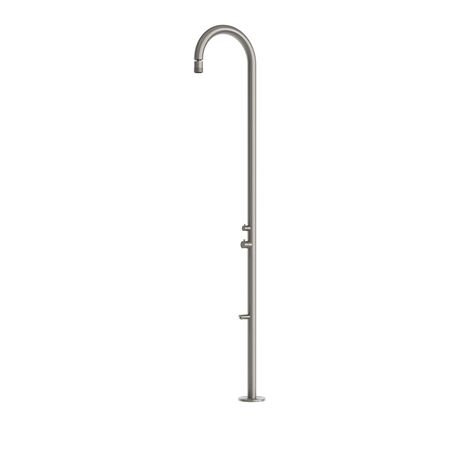
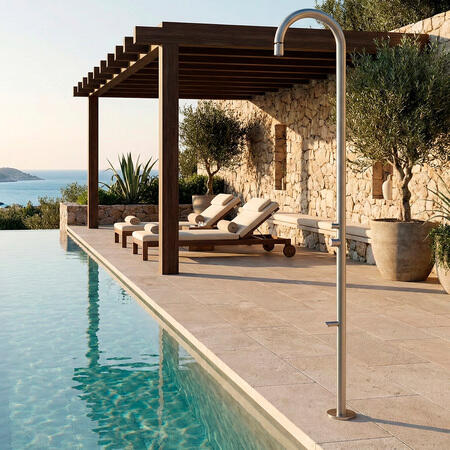
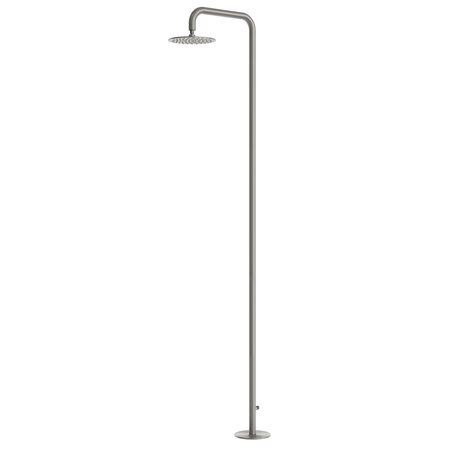
A freestanding model can also serve as an architectural feature. A slim column in brushed stainless steel creates an understated look, while a black or brass-coloured shower can make a striking design statement.
However, positioning requires planning. You need access to the required water supplies, a stable foundation and a suitable way to drain the shower water.
One of the most important decisions is whether your outdoor shower should have cold water only or whether you want to control the temperature using both hot and cold water.
A cold-water model is a simple solution for the garden, pool area or holiday home.
It is especially suitable for a quick rinse after swimming, gardening or a hot day in the sun.
Installation is often less extensive because only one water supply is required.
Always check how the specific model needs to be connected.
If you want to enjoy a comfortably warm outdoor shower, a model with a mixer tap is an obvious choice.
The shower connects to both hot and cold water, allowing you to set the water temperature.
This provides greater comfort on cooler days and makes the shower more suitable for regular bathing.
Installation requires both water supplies to reach the shower's location.
Remember that a normal freestanding shower with hot and cold water does not heat the water itself. The hot water must come from an existing hot water installation or another suitable heating source.
A freestanding shower normally needs to be secured to a stable foundation, and the water pipes must be brought to its connection point.
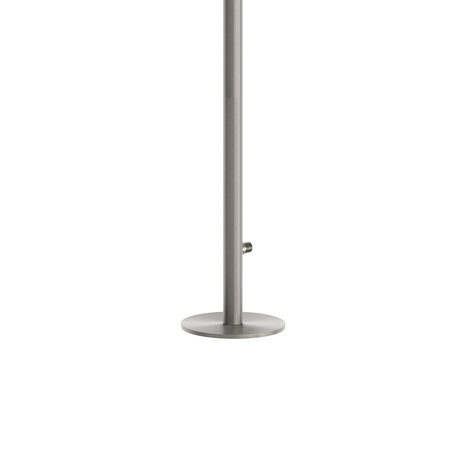
On many models, the water pipes run up through the foundation and enter the shower from below. This allows an elegant installation without visible pipework.
Other models have specific connection arrangements. It is therefore important to study the technical drawing and installation instructions before preparing the foundation and pipes.
If you plan to use a shower with hot and cold water, both supplies must be positioned correctly in relation to the shower connections.
A qualified plumber can help assess the required installation, correct connections and any requirements relating to the water supply.
A useful tip: Choose the shower model before building the foundation. This allows you to position bolts, water pipes and any drainage to suit the specific shower.
A good location involves more than views and design. The foundation must be stable, the shower must stand securely and the water must be able to drain away without causing problems.
Many freestanding showers are designed to be fixed to a solid surface, such as a suitable concrete foundation.
On a wooden deck, ensure that the structure can support the shower and allows secure anchoring.
Always follow the manufacturer's guidance on bolts, mounting flanges and foundation design.
When an outdoor shower is used regularly, considerable amounts of water may flow onto the ground.
Choose an area with a suitable solution for draining away shower water.
The need for drainage and any local requirements depend on the location, amount of water and whether soap or shampoo is used.
An outdoor shower can form part of a terrace, pool area or a separate, screened shower space. Also consider privacy, wind conditions and access to the shower.
The material affects appearance, maintenance and the shower's resistance to outdoor conditions. Our range includes freestanding showers made from stainless steel and aluminium.
AISI 304 stainless steel is a common choice for outdoor showers.
It provides a robust, timeless appearance and suits many outdoor environments when maintained correctly.
In environments with high levels of salt or chlorides, increased corrosion resistance may be desirable.
AISI 316 and 316L contain molybdenum, which improves the steel's resistance to certain types of corrosion.
This makes the material particularly relevant in coastal areas, where salt in the air can affect surfaces.
The material still requires proper cleaning and regular maintenance.
Aluminium is relatively lightweight and allows elegant designs with different surface treatments.
It is used for modern freestanding showers with slim or more distinctive shapes.
Durability depends on the construction, surface treatment and ongoing care.
A freestanding shower is often visible from several angles. Design and surface finish therefore play an important role in helping it blend into the architecture of the garden or terrace.
Brushed stainless steel is a classic, versatile choice for modern and traditional outdoor spaces. Its understated finish works well with natural stone, wood and concrete.
Black showers create a bold, contemporary look. They are particularly well suited to minimalist terraces, dark window frames and clean architectural lines.
Brass- and copper-coloured finishes add warmth and character. They combine beautifully with wood, natural stone and green planting.
You will also find models in white, gun metal and various combinations of materials and colours.
Remember the difference between the actual material and the decorative finish. A shower with a brass- or copper-coloured finish is not necessarily made from solid brass or copper.
Besides the water connection, freestanding showers differ in the features they offer. It is worth considering how you mainly intend to use the shower.
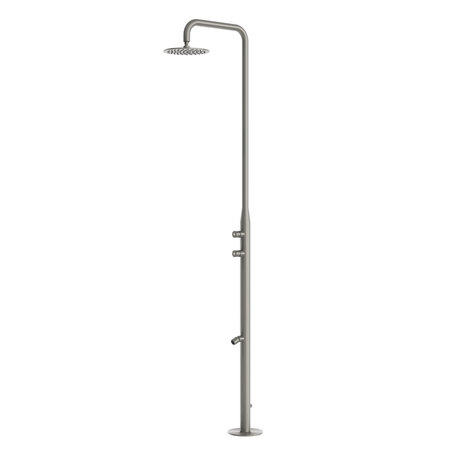
For regular showering, a hand shower can be especially useful. Beside the pool, a foot shower makes it possible to rinse your feet without turning on the overhead shower.
A simple model without additional features may instead be the right choice if you prefer a minimalist appearance and mainly use the shower for quick rinses.
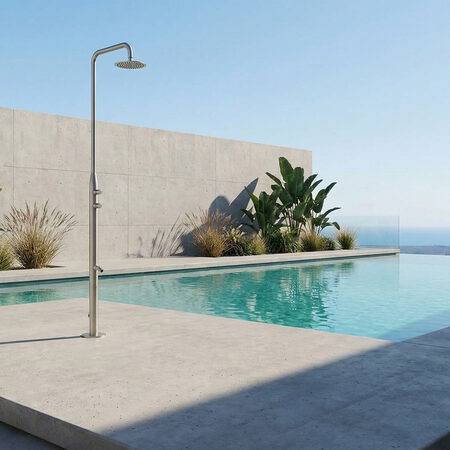
Beside the swimming pool, a freestanding shower lets you rinse off before and after swimming. This is useful for comfort and helps reduce the amount of dirt entering the pool.
On the terrace, the shower can become part of an inviting outdoor bathing area. Combine it with screening, timber cladding or natural stone paving for a calm, cohesive appearance.
At the holiday home, an outdoor shower is ideal for rinsing off sand after visiting the beach or enjoying a refreshing shower on a hot summer day.
If you have a sauna, an outdoor shower can also be a natural part of the experience. Pay particular attention to water temperature, privacy and a non-slip surface.
The best location therefore depends on how you intend to use the shower day to day – not only where it looks most attractive.
Most freestanding outdoor showers are not frost-proof. This also applies to many stainless steel models.
Even if the outside is made from a weather-resistant material, frost can still damage pipes, valves, mixer taps and other internal components.
Water expands when it freezes. Even small amounts of water trapped in a closed installation can cause damage.
Before frost arrives, the water supply must be disconnected and the shower completely drained in accordance with the manufacturer's instructions.
Many models must be dismantled and stored in a frost-free location during winter. Pay particular attention to mixer taps, hoses, valves and other parts where water may remain.
Frost damage caused by incorrect winter preparation is normally not covered by the manufacturer's warranty or applicable statutory consumer rights unless an original product defect is involved.
Regular cleaning is an important part of maintenance, regardless of the material used for your freestanding shower.
Clean the surfaces with a soft cloth and a mild cleaning product suitable for the material and finish.
Avoid abrasive cleaners, rough sponges and harsh chemicals that could damage brushed or coloured surfaces.
If the shower is located near the sea or in an environment with salt or chlorides, more frequent cleaning may be necessary. Stainless steel is corrosion-resistant but not entirely maintenance-free.
Also remove limescale from the shower head according to the manufacturer's recommendations and regularly check joints and connections for leaks.
If the shower has not been used for an extended period, the water installation should be flushed according to the relevant instructions before being used again.
A freestanding shower is installed on a suitable surface or foundation and does not need a wall. A wall-mounted shower is fixed to a wall or façade. A freestanding model therefore offers more freedom of placement but requires a stable foundation and correctly installed water supplies.
Yes. Many freestanding showers are available with both hot and cold water connections and a mixer tap. However, hot water must come from a suitable hot water installation because a normal freestanding shower does not heat the water itself.
It depends on the model. On many showers, the water pipes pass through the foundation and enter the shower from below. Hot-and-cold models require two supplies, while cold-water models usually require one. Always follow the specific installation instructions.
It may be possible if the deck structure is suitable and secure fixing can be provided. The surface must withstand the loads from the shower and its use. Always check the manufacturer's foundation and installation requirements.
Stainless steel 316 and 316L generally provide better resistance to chloride-related corrosion than 304. This can be beneficial in coastal or other demanding environments. Both materials still require proper cleaning and maintenance.
A hand shower provides greater flexibility for everyday showering. It makes it easier to rinse specific parts of the body, wash your hair or help children shower. It can also be useful beside the pool.
That depends on the location, amount of water, use of soap and local regulations. Water must be managed properly to avoid moisture problems or inconvenience around the installation. For a permanent installation, drainage should be considered from the beginning.
Most freestanding showers are not frost-proof. Before winter, the water supply must be disconnected and all water-carrying parts fully drained. Many models must also be dismantled and stored in a frost-free location. Follow the manufacturer's instructions.
It depends on how it will be used. A cold-water model may be sufficient for quick rinses, while hot and cold water provide greater comfort. A foot shower is practical for removing sand and dirt, while a hand shower offers added flexibility.
Whether you want a simple shower for the holiday home, a functional pool shower or a premium solution with hot and cold water, there are many options available.
Our range includes freestanding outdoor showers in various materials, colours and designs, with or without hand showers and foot showers.
First consider the water connections, installation possibilities and location. Then choose the features and finish that best suit your outdoor space.
Use the filters in the product listing to find the freestanding outdoor shower that best suits your needs.


